
Your Emotions Are Not Getting in the Way of Your Intuition—They May Be How It Speaks
emotions intuition lotus painting Sep 04, 2026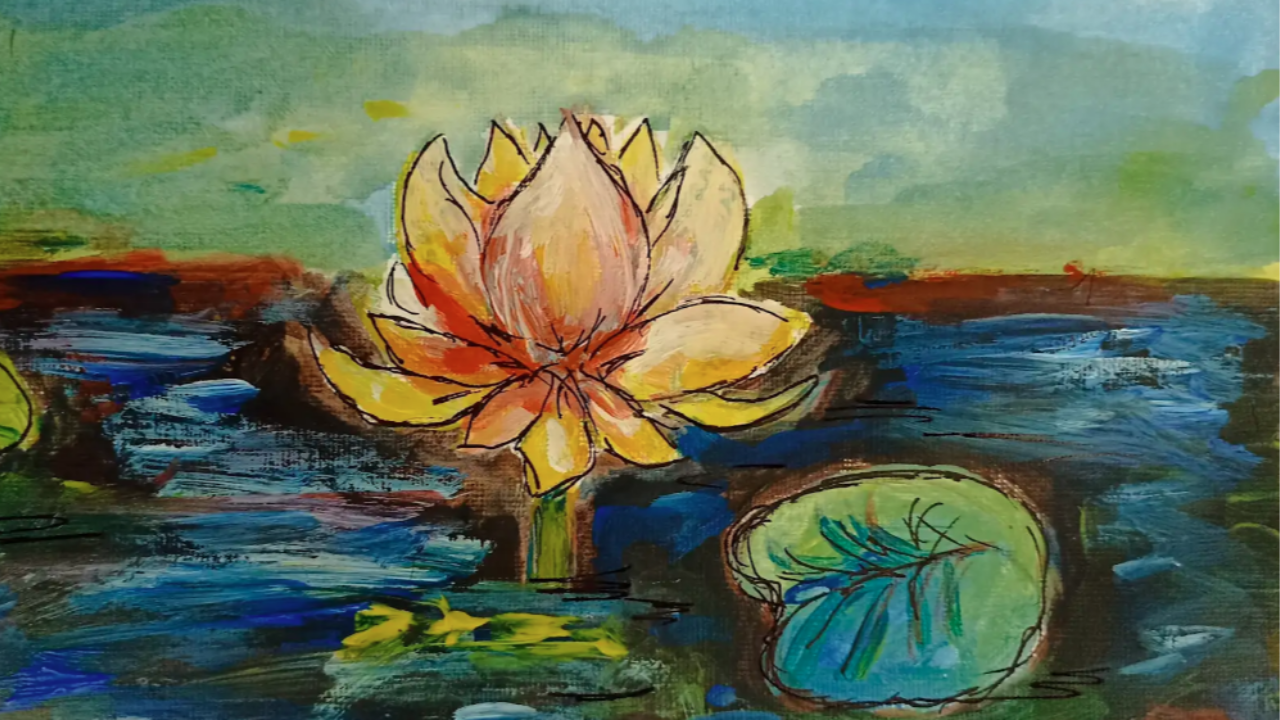
Article By Anna-Emilia Hietanen
Intuitive Soul Painting
Recently, I was meditating to reach a decision. I already knew what I wanted the answer to be, so I did what I usually do — I tried to set that wanting aside. My assumption was simple: the "right" answer would arrive quietly, without emotion attached. That's how intuition is supposed to work, isn't it? Clear the noise, and the truth appears underneath it.
But the feeling wouldn't clear.
It wasn't anxiety. It wasn't confusion. It wasn't even the desire I'd been trying to set aside.
It was love — the longing to be near the people I love, to show up for them, to give my daughter something I once had myself.
And an insight arrived with it: the decision doesn't have to be rational to be the right one.
That stopped me. Because I've spent a long time believing that emotions and intuition live on opposite sides of a line — that feeling something strongly is exactly the moment to distrust myself most. Fear disguises itself as caution. Desire disguises itself as certainty. So I learned to separate the two, to wait for the quiet, detached whisper before I trusted anything.
But what if that's a false choice? Not because emotions never cloud intuition. They often do. But because some emotions, the clear and deeply rooted ones, aren't static in the way. They're one of the ways intuition speaks.
Emotions can't always be turned off to be able to hear intuition, as I learned. But they also can't be turned off even if we don't want to deal with them. Even though I teach others how to work with emotions through art, it still happens to me: sometimes an emotion seems to be too much. It's those times when everything seems so overwhelming that putting emotions on hold for later sounds like the best thing to do. "I don't have time to deal with this right now" becomes the plan. "I need to be functional. I cannot deal with my emotions right now, because then I will not be able to deal with everything else. I'll feel later."
Of course, that rarely works.
The emotions don't dissolve just because we postponed it — it waits, and if it waits too long, it starts speaking in other ways. Irritability. A short temper with someone who didn't deserve it. Sometimes even the body, tightening or aching where the feeling had nowhere else to go.
"Working with" emotions can sound as if every feeling must become a project—something to analyze, shift, or turn into wisdom. But sometimes we do not need to do anything to the emotion. We need to stop pushing it away long enough to let it exist. Just sit with it, and let it come.
This is why intuition and emotion are so closely connected for me. Neither always speaks in complete sentences. Both can arrive through the body, an image, a memory, or a symbol that keeps returning.
Art gives that wordless knowledge somewhere to go.
When we paint intuitively, the purpose is not to make a beautiful picture. We can let a color hold anger, let a line follow longing, or allow an unexpected shape to appear. A painting can become a meeting place between what we know and what has not yet found words.
When I am unsure whether an emotion is obscuring my intuition or carrying part of its message, I ask:
- What am I actually feeling? Not what should I feel, but what is here?
- What is this emotion trying to protect, reveal, or ask me to notice?
- What remains true when the first wave softens? Intuition is often not the intensity itself, but the deeper truth still there after we give the emotion room.
Sometimes the clearest answer is rooted in love, grief, desire, or the knowledge that we have been making ourselves small for too long.
Perhaps emotional clarity is not about becoming emotionless. Perhaps it is about becoming honest enough to hear what our emotions—and the quieter knowing moving through them—have been trying to tell us.
This is, in a way, the whole premise behind Lotus in the Mud — the idea that what feels murky, tangled, or "too much" isn't the opposite of beauty or clarity. It's often where they grow from. The lotus doesn't bloom despite the mud. It blooms because of what the mud holds.
If you've been sitting on an emotion you haven't had the time, the words, or the courage to work with yet, Lotus in the Mud is a free creative practice to help you meet it — not to analyze it from a distance, but to actually sit with it, through art, and let it show you what it came to say. You do not need to consider yourself an artist or know what your painting will mean before you begin.
[Get Lotus in the Mud — free →]
https://www.intuitivesoulpainting.com/courses/lotus-in-the-mud
Stay connected with news and updates!
Join our mailing list to receive the latest news and updates from our team.
Don't worry, your information will not be shared.
We hate SPAM. We will never sell your information, for any reason.
Categories
All Categories $40m business 100 clients in 20 days 12-steps of loving an addict 2025 3-month $30k coaching experience that's a 1-time payment of only $75 6 figures 6-figure coach 6-figures 7 figure coaching business 7 figures 8 minutes a new you abby davin abcareermatch abundance abuse healing accessibility accidental ceo account suspension accountability accountant accounting acomplishment acountant act as if activator actor adam grant addiction adhd adina kroll adopt dont shop adoption ads adult swimming adventure advertising advice advocate affiliate marketing affirmations affordability after care ai akajabi free trial akashic akashic intelligence architect alan wick alea marie alea marie quiles alex arbaugh alex benkast alex garzaro ali valdes aliens align alingment alisha tibbs powell all in all in one all in one platform all natural allies allison barnett allistar banks amanda bryant amanda houck amanda keene amanda kintz amanda kunkel amanda rose amandine amazing crm amber powers amber till amiee boswinkle amor fati amplify amy d. taylor analystics analytics anavé andrea waltz andrew fantasia angela haas angela judith angela m. smith angell deer angels angiealchemist anika wilson animalist animals animation anissa cosby anna imagination anthem anxiety aodaoin aodoain hathaway apparel aquarian rebellion aquarius aquatics areej ahemd arguments ariemsfaith arooj ashraf art artist artists arts ascension funnel ashley t brundage assessment asset astrologer astrology athena's home novelties athletes attractor attune to your audience auhtority authenticity author author of the month author spotlight authority authors auto mailer autumn autumn and bliss awakening award winning awareness awe factor academy ayurvedaforsuccess ayurvedic b.i.t.c.h back end back pain bali bath products bath salts bazaar bbc be to become beautiful soul beauty becci mongold becky shapiro becoming not you becoming your own best friend behind the scenes bel essence belief beliefs beronica parham bespoke designs best gifts of 2020 best selling best selling author bestseller bestselling bestselling author beverly isla bill fanter bime beauty birds birthday bitcoin biz babe black cat black friday black friday sale black friday sales blissful road blog blue zones board certification bodi body butter bodybuilder book book bazaar book club book launch book marketing book release book signing bookkeeping books boomer bootstrap business boss boss babe boundaries brain fog brand brand story brand strategist branding breaking the rules breath breathe to wealth brendah ndebele bri hill brian p. swift brianna blechinger broke brooke allison wandling brooke schultz budgeting build your dream life bundle bundles bunny burnout business business & mindset leadership business backend business coach business consultant business marketing business owner business systems busy butterflies c'mon get crafty c.i.r.c.l.e. method c.l.e.a.r. method cait townsley caity see callie rich neal calm camilla ochlan canada canada day canadian canadian author canadian business canadiene canine friend carissa andrews carlyle labuschagne carol lever carole carole macleod carrie lowarnce carrie veatch carter fielding cash flow cassandra comeau cassie mackenzie cat cat johnston catarina bento cathleen m rose cats cecilia rene celebrate ceo certification certified holistic pet health coach and canine nutritionist cesar hernandez change the world charity charmaine chase thornock chatgpt checkout chef chemical free chera carmichael cheri hayashi child development childcare speaker childfree children children's book children's books childrens book childrens books chiron christian christian author christie ruffino christine burrows christine's crafts christmas christy holt christy l. demetrakis chronic pain cindy schneider clarity clients clinicians clothing clutter co-author coach coaches coaching coaching program coding abundance collaboration coloring book colouring book commit communication community compassion compatibility compost academy composting confidence confident course creation confrontation management connection consisten cash and clients consistent cash and clients consistent clients construction consult consultant consultants content contest conversion cook book cookbook cooking copy copywriter copywriting core core wound healer corporate costa rica couples coupon course creation courses covid-19 cozy cadence crafts craig jerome crazy always wins creatives creativity creator credibility crime crm crunchy hippie life crypto crystals cyber monday cycber monday cynthia stant césar gamio dances with dragons daniel anderson daniel mccutcheon danielle abbott david schilling day trading death debbie cleveland debbie movsesian debs de vries debt deliveries depression derek patterson design designer detachment dharma academy by dharma wellbeing diamonds and gifts diane nichols diane nnaemeka diet digital business strategist digital clutter digital currency digital marketer dildos direction disabilities disability discount disorder distributor divorce dog dog training dogs donate donation donna amos dr. andré walton dr. mark johnson dream come true dreams duality duolingo earn more eating disorder ebay ebook eclipse ecology economic growth eeducation eft eg farmhouse crafts elbows up election electric eye lash curler elena ramsey elevate joy email marketing embodied authenticity™ embodiment emily taffel emotion emotions empath empowered empowering differences empowerment enagic energetics energy energy healing energy work enlightened warrior enneagram enough entrepeneur entrepreneur entrepreneur life entrepreneurs entrepreneurship equinox erw esthetician etsy europe evelina event events evenue evergreen expectant author expert facebook facebook suspension failure fairy tales faith fantasy fatigue fear feature fiction final quarter finance finances financial freedom financial therapy find clients fire fury frontier fire fury saga fitness flow economics fluid in lungs focus folk lore food foodology forbes framework francine juhlin francophone free guide free shipping free trial freedom freedom of movement freedom revolution french from fear to freedom frugal fun fundraiser funnel funnels fur paws boutique game gananoque humane society gardening gdhs cats gemstones gen edwards gen x gennye lion ghostwriter gift box gifted gypsy gifts giveaway global butterfly go for no goals good behaviour good enough goodfood google ranking gothic grandmother's trunk press graphic design gratitude green living circle grey matter global ltd grounded monkey group coaching group growth groups grow growth guide gypsy quartz & apothecary h.r. relation habits handcrafted happiness happy pocket full of money hardcover hay house author head hunter healer healing health health and wealth coach health care health care practice healthcare healthy eating 101 heather russell heather smith heidi richards mooney heidi smith helen walton help helpful her money system high acheiver high acheivers high ticket high volume history holiday holiday sale holidays holistic home owners homeostasis hoodie hormones host human connection human design humor hurricane relief hydration hydrogen rich water hypnosis hypnotherapist hypnotist i'm a f*cking entrepreneur i'm a fucking entrepreneur idea driven club identity ig imafe iman aghay impact impact unleashed income incubator indie industry infinite bundle infinite leads infinite u influencer inner explorer yoga innovation insane insight inspiration instagram integrative regression method intention interview intimacy into the wind intuition intuitive intuitive soul painting investing investment is love enough ishop it itunes jackie rodgerson jacquelynn cotten jake duffy jalissa james johnson jamie nuss jamie wiggins jan halen jana niksa janel louise ohletz janet mohapi-banks jani clark jc konitz jeane jorgensen jeannie guzman jeannine betts jen sincero jenn fast jennafer conley jennie milton jennifer baio jennifer dragonette jennifer perri jennifer vaaler jessica james jewelry jim donovan joanna szewczyk jobseeker john grisby joint venture journal joy judy fitzepatrick juliana frisoli just women talking sh!t kajabi kajabi free trial kalle suonio karena neukirchner karmic debt kat's cryptic komforts kate cornelius kath younger katie joy katrina julia kayshaun brooks keeley winfield keep on walking keisha dixon kela robinson smith kelli murphy-cohen kesha maute kevin yoder key chain khwan hathai kidney disease kids kiera bryan kim argetsinger kim hendra kim rodriguez kinga gecsey kirsten newman kite surfing kitesurfer knee pain know better u kristin longacre kyla liu kyle ewing lace flowers lady x lanuage launch launch party launching laura charelle laura kasl lauren najar law law firm for small business law of attraction lawyer lead lead gen lead generation lead with heart leaders leadership leads leander knight learn learning leaving legacy code legal leslie gaudet leverage lg3 lgbtq+ liberal life coach life lesson lifestyle lightwork limitless lindsay stead lindsey rainwater lions gate lisa pilon lisa-may huby list building list growth lists literary fiction livewell loa long term growth longevity lonnie beerman loraine yoder lost access lost account lotus louise jeffrey love love of fate low energy lush leads and lists lynn wyvill made with love cookbook magical new beginnings magick make up makegoodfood makeover your mindset malak ouza mama mandy schulis manifest manifestation manifesting manifesting magic manifesting on purpose manifesting series manifesting through gratitude manifesting your best life marc maley maria c krause marie wroe mark carney marketing marole mcleod marriage martine cadet mary ann stenquist masks mass removal mass takedown massage oil master your mind masterclass mathew dick may the fourth mba agency mckenzie young meal time med legal pro media meditation megan chamberlin megan nolan megs thompson melissa conkling melissa f miller melissa minnich melissa watson membership memberships memoir menopause mental edge mental health mentor mentors mercury retrograde message message and funnel messaging meta metaphysical michael elsner michael neeley michaelle branch michelle franick michelle hawkins michelle jones-dauberman microbiology middle class midlife millennials millionaire mind mind over matter mindful mindset mindsight partners minorities miranda casiano mlm modalities model modern menopause canada moment mompreneur moms money money management monica doyle monica hill morning routine morpheus motivation movement world mug mugs music musician my brand academy mysteries mystery mystery shopping mystical love myth myths nadine little nancy boyd nancy rose nandin kathleen baker narcissistic abuse nata salvatori nation nature nbg nd near death experience nervous system networking neural rewiring neuroaffirming neurodivergence neuromuscular coordination neuroscience new age new earth new paradigm new publication new year nextbite nicole denner nicole fairfield nneka allen no bs no bs biz co no fuss ads no upsell nobody greater llc nomad nueroscience nuerospicy nurse nurture nutrition observations of cats and dragons offer office office management oh'letz grow okinawa one breakthrough now online courses online magazine ontario opportunity opt ins opt-in optimist options oracle cards oracle deck organic organic traffic ornaments osteoarthritis out of the box overcoming pagan paid speaker paid to shop paige hill pain management painting pam grout paperback parenting parents part time passion passive income passive profits path patricia elizabeth leblanc paul heingarten payment plan peace peacocks penny phoenix performance perimenopause personal change personal developement personal development personal devlopment personal growth personality perspective pessimist pets phone